Happy Friday GPODers!
Yesterday we were transported back to warm weather and peak season color thanks to Ezequiel Martín Barakat in Buenos Aires, Argentina (Be sure to check that out, if you missed it: Spring in Ezequiel’s Argentina Garden), but today we’re celebrating the beauty that a subdued winter garden can provide. Carol Verhake in Berwyn, Pennsylvania has shared her garden with us many times in the past (Check out her garden in other seasons: Revisiting Carol’s Fall Garden, Carefully Chosen Colors Bring a Garden Together, New Spaces in Carol’s Garden, and more), but some of our favorite submissions are of her winter landscape (Carol’s Garden in Winter, Snow in Carol’s Garden, Beauty in the Winter Garden, and January in Carol’s Garden). Today she is back to share some gorgeous shots of her beautiful winter garden that was made even more enchanting by a fresh blanket of snow.
It’s been a while since I last shared photos. Life got busy, and on June 19, straight-line winds caused significant tree damage in my garden. I chose to leave one massive fallen tree where it landed, naming that area Mother Nature’s Fury—not the first time she’s left her mark there.
Last night, several inches of snow fell, blanketing the garden in white. This is when it feels most special: quiet, calm, and insistent that you slow down and notice the details. I couldn’t love it more.
Carol Verhake
Berwyn, PA
Zone 7
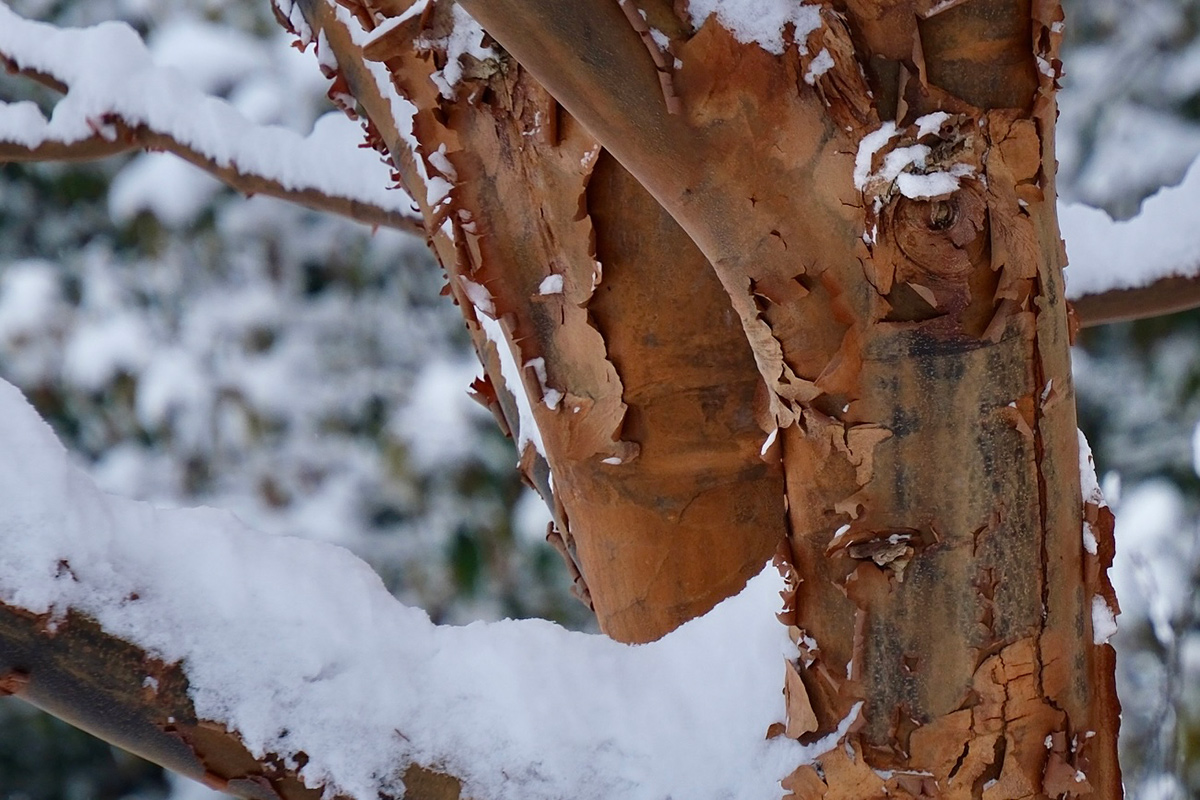 In the quieter landscapes of winter, garden elements that sometimes fade into the background during more lively seasons now take center stage. Paperbark maple (Acer griseum, Zone 4–8) is a gorgeous tree all year-round, but it becomes a glowing focal point in the late season.
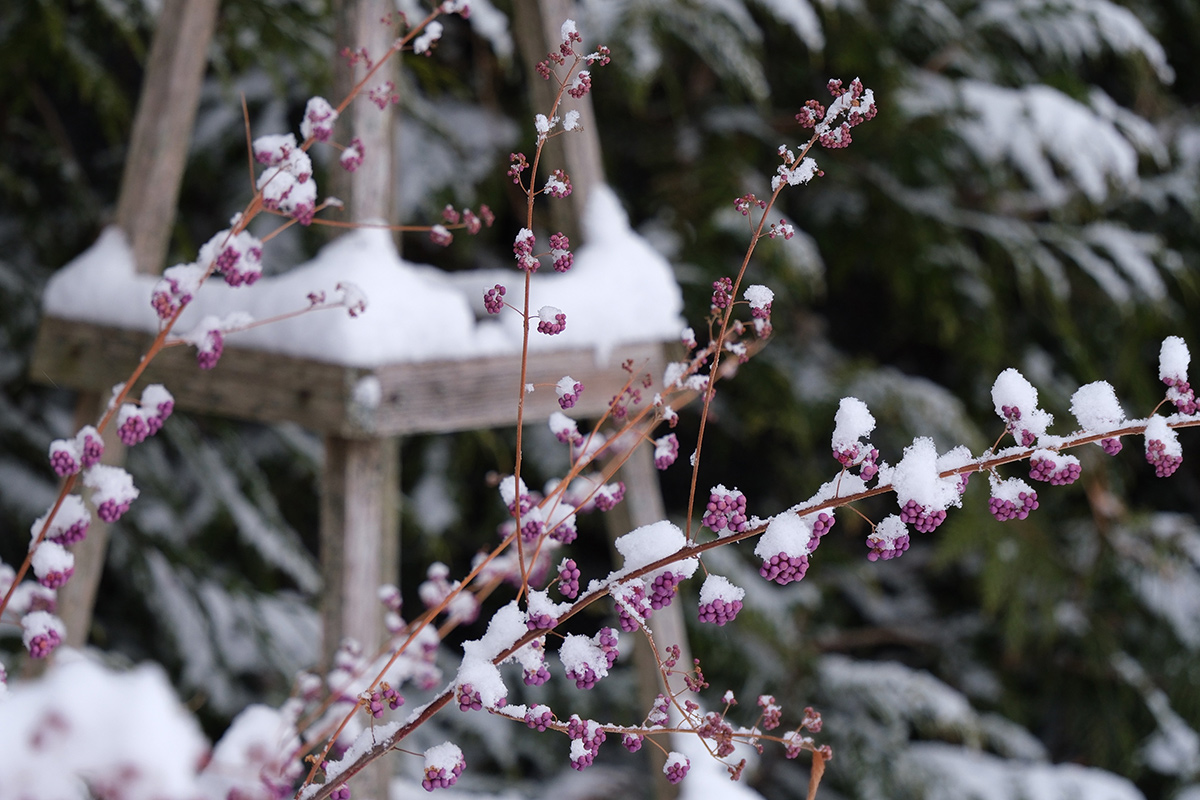 Carol has made many superb plant selections for an exciting winter garden. ‘Early Amethyst’ beautyberry (Callicarpa dichotoma ‘Early Amethyst’, Zone 5–8) is just wrapping up it’s yearly performance with these gorgeous clusters of pretty purple fruit, which were preceded by lush, verdant foliage and small, pink to lavender flowers.
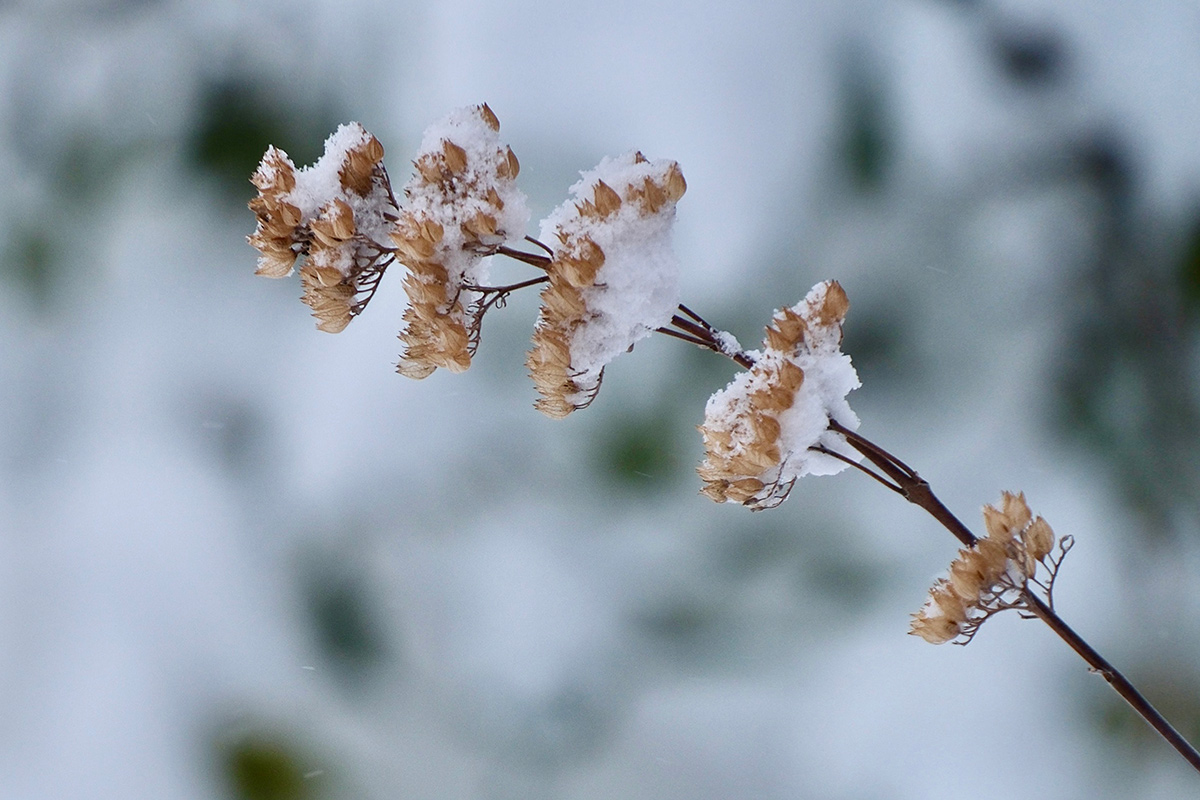 Other plants in Carol’s garden, like this bluebeard (Caryopteris x clandonensis, Zone 6–9), provide interest through plant structures that have already faded. These seed heads don’t add exciting color, but are the clusters provide interesting shapes and perfect perches for clumps of snow to cling on to.
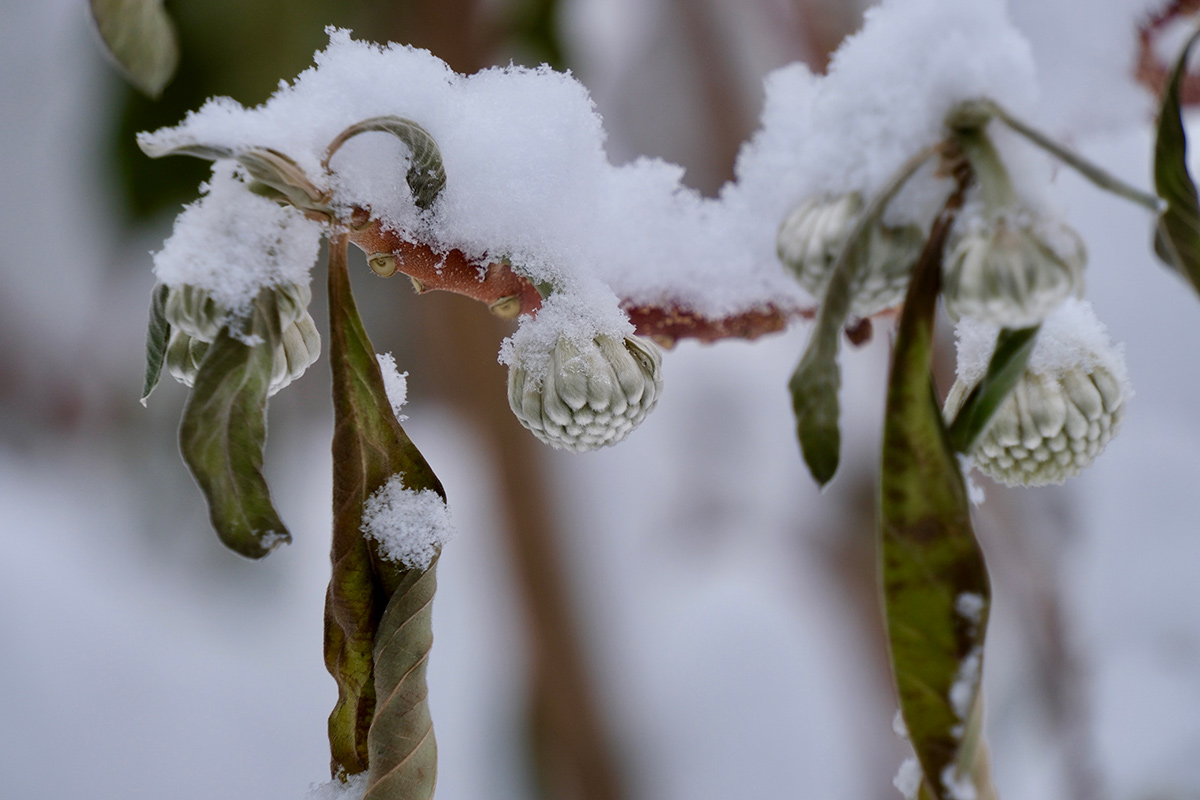 Other plants, like paperbush (Edgeworthia chrysantha, Zone 7–10), are excellent choices for the new growth they get at the end of the season. These buds won’t open until very late winter to early spring, but their silvery-green color are still an interesting addition to a winter landscape.
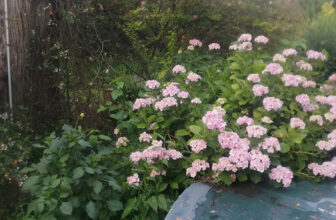
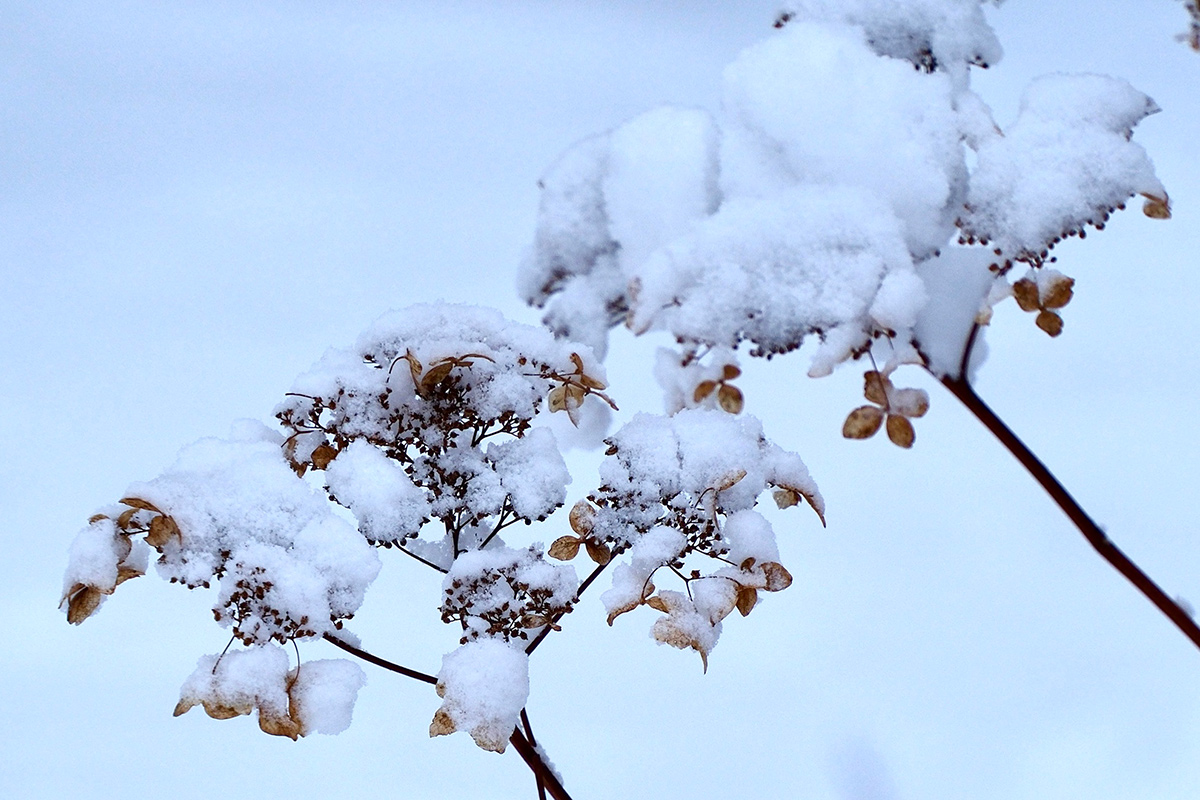 Another plant Carol enjoys for interesting seed heads and dried blooms are hydrangeas. This lacecap hydrangea will give an even more convincing lace illusion as the snow begins to melt.
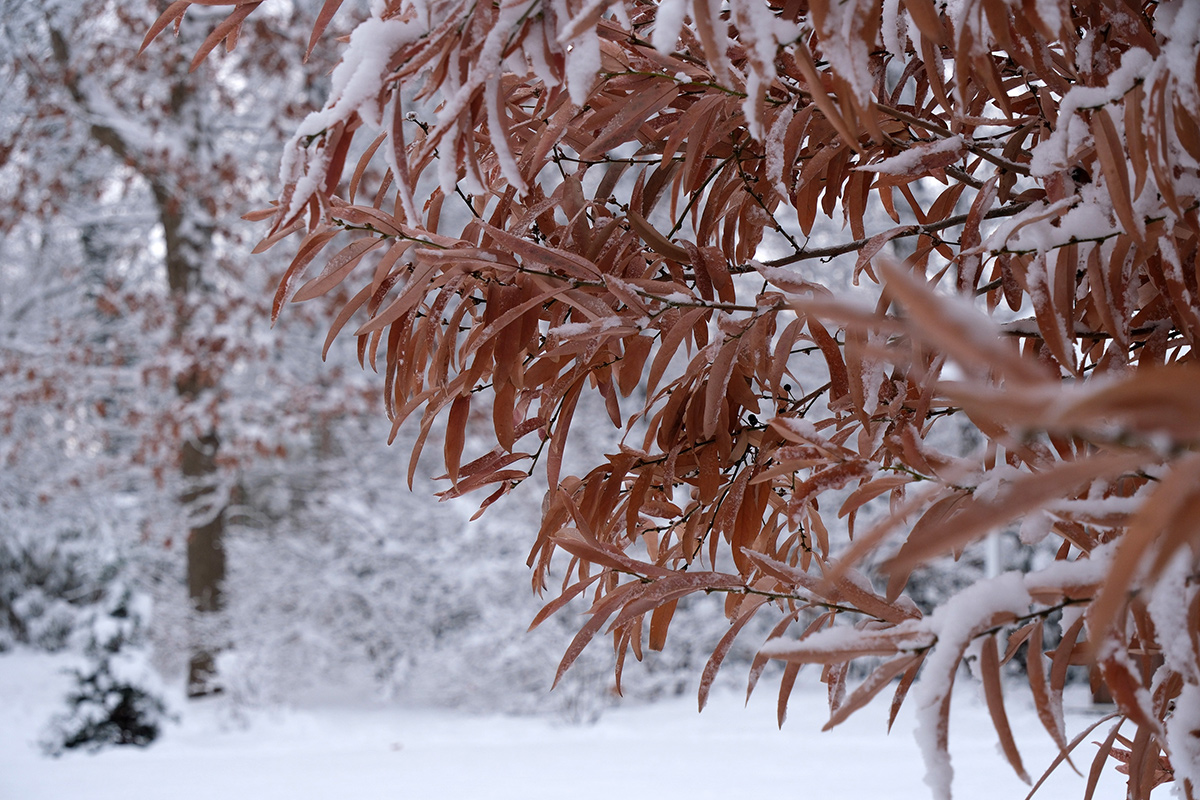 The first snowfalls of the season can be the most interesting, and not only because we haven’t yet tired of clearing cars, driveways and sidewalks. Some deciduous trees and shrubs often still have faded foliage that give the snow more surfaces to coat. Carol’s oriental spicebush (Lindera angustifolia, Zone 6–8) was still covered in light orange leaves when this snow hit.
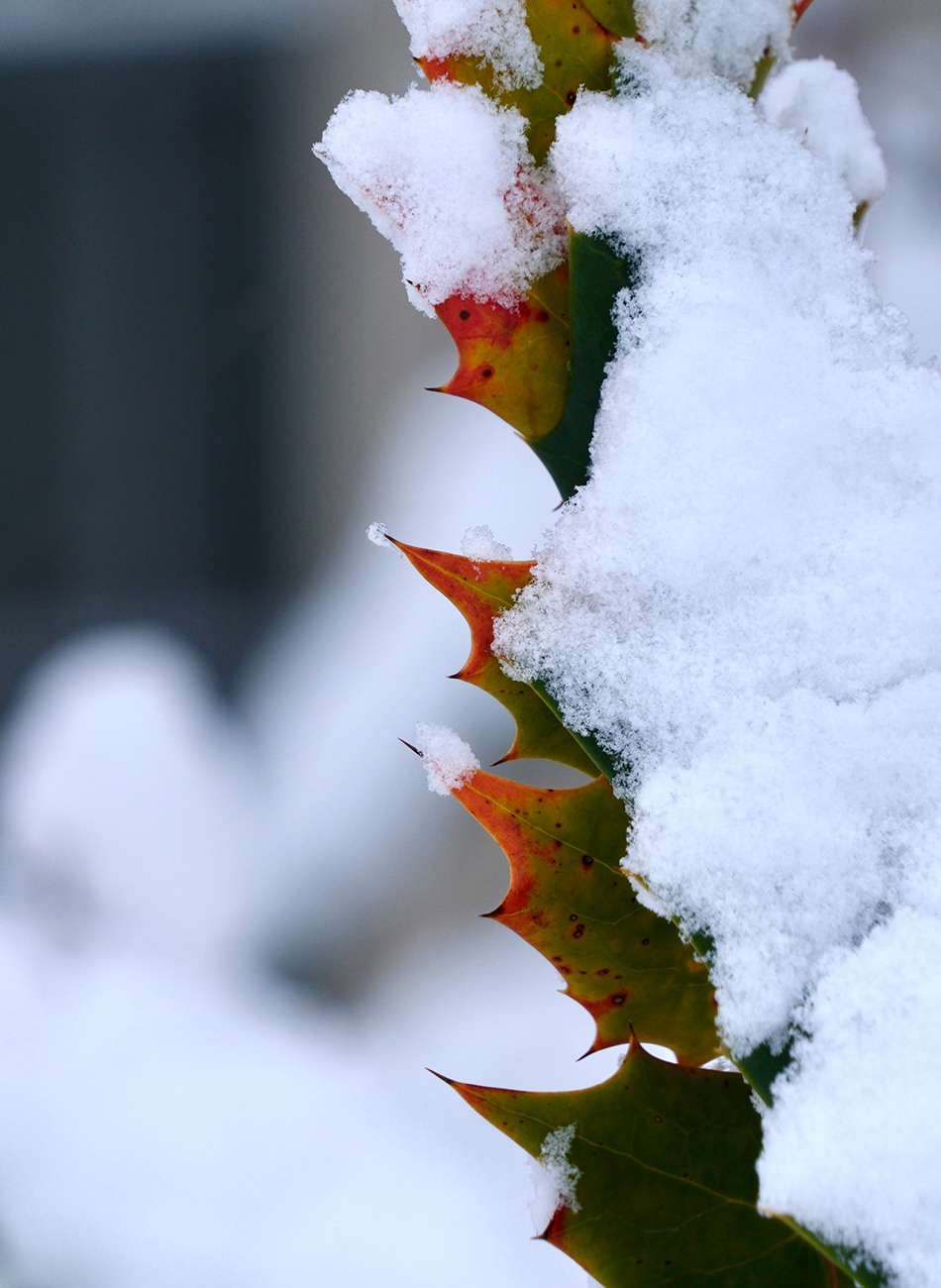 Carol has demonstrated how deciduous plants can still provide interest through fading foliage and seed heads, but evergreens are synonymous with winter for a reason. Conifers are always classic, but there is a whole world of trees, shrubs, and even some perennials to explore. Carol’s leatherleaf mahonia (Mahonia bealei, Zone 7–9) is s standout selection and adds and extra pop of color with leaves tipped in a vibrant orange-red.
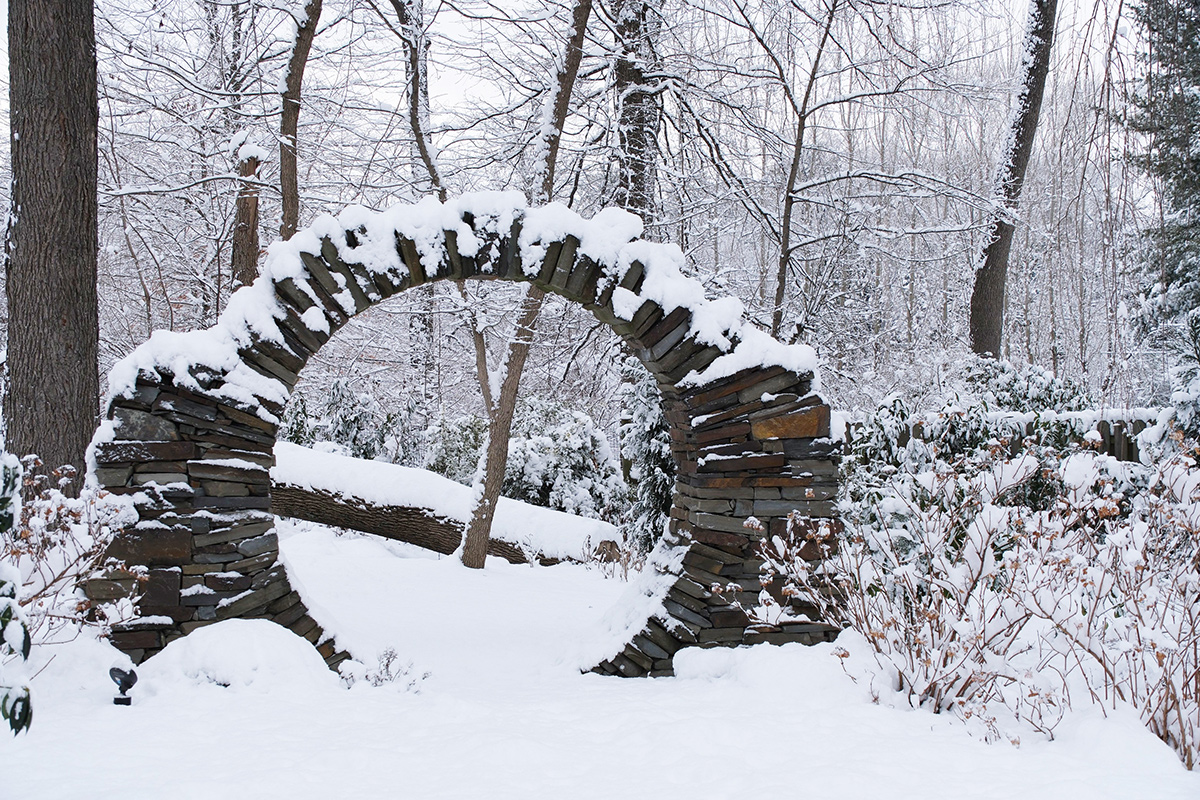 Carol’s garden is instantly recognizable from her stunning stone moon gate. Serving as a kind of picture frame in the landscape, many moments of magic have been captured through and around this garden portal. In this season the gate is showcasing the fallen tree that Carol mentioned in her intro.
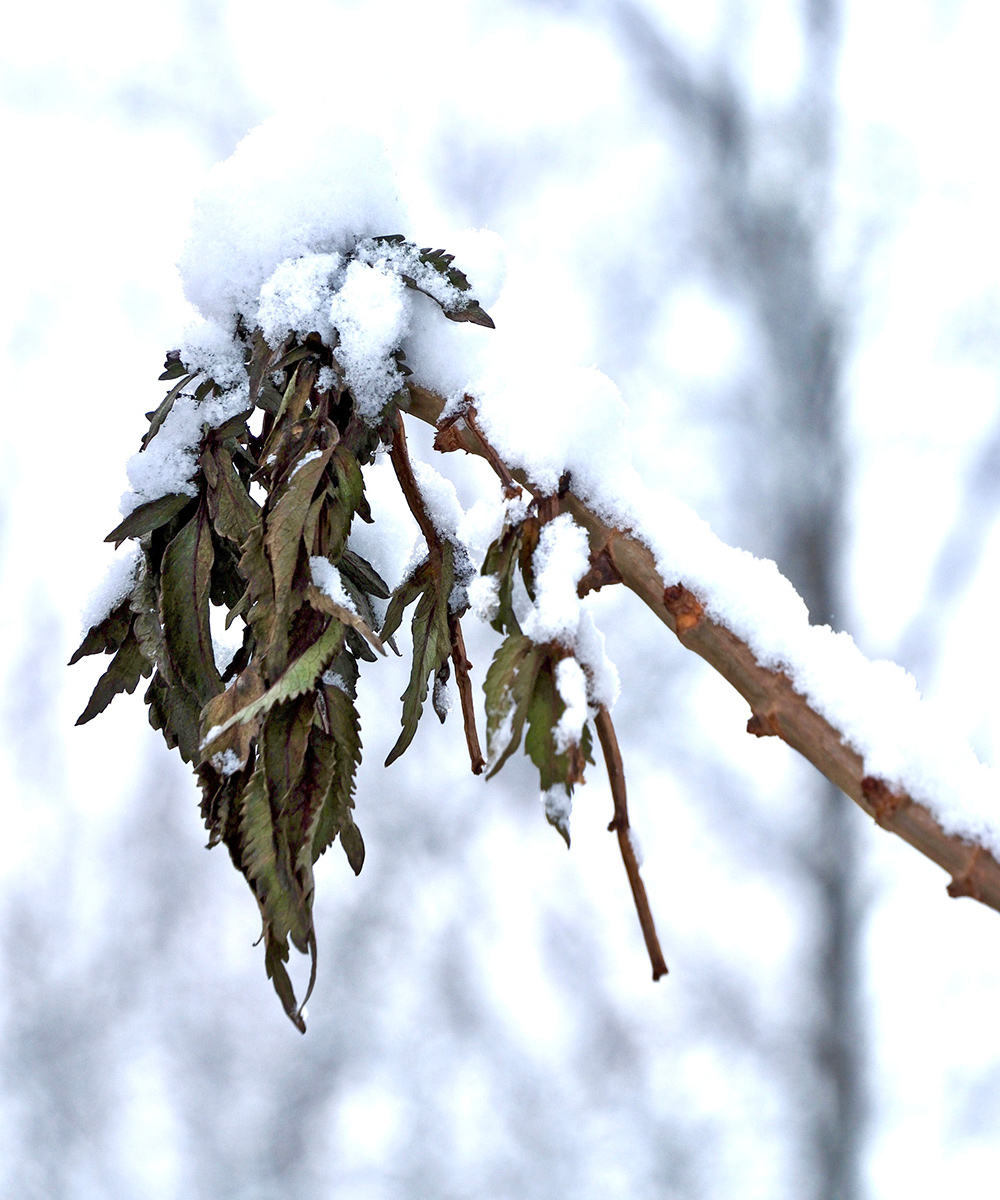 Winter is also an time to take appreciation of some of the darker themes of life, like decay and death. The last leaves of a ‘Black Tower’ elderberry (Sambucus nigra ‘EIFFEL 1’, Zone 4–8) are sure to fall after this snowstorm, but they held on long enough to provide one last moment of interest and intrigue.
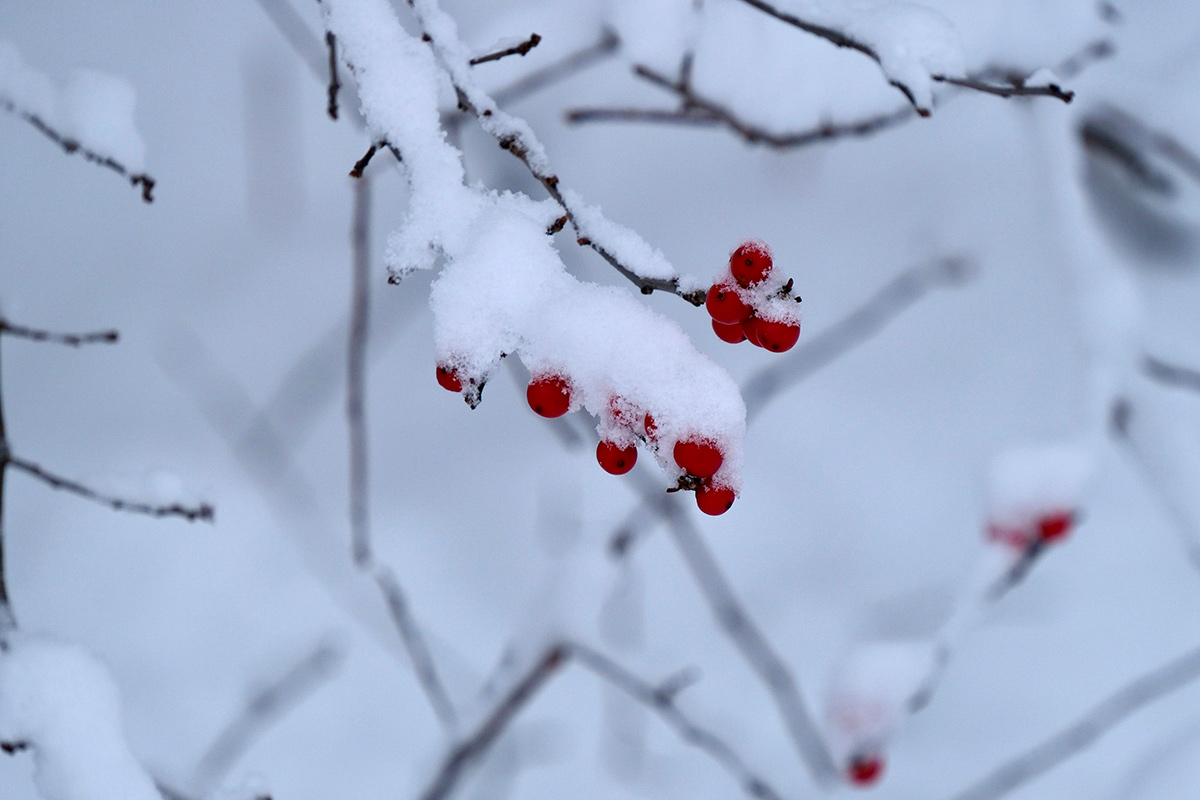 Berries are always a wonderful addition to winter gardens for their bright color as well as the sustenance they provide birds during this unforgiving time of year. The vibrant red berries of ‘Winter Red’ winterberry (Ilex verticillata ‘Winter Red’, Zone 3–9) are extra radiant against a snowy white backdrop.
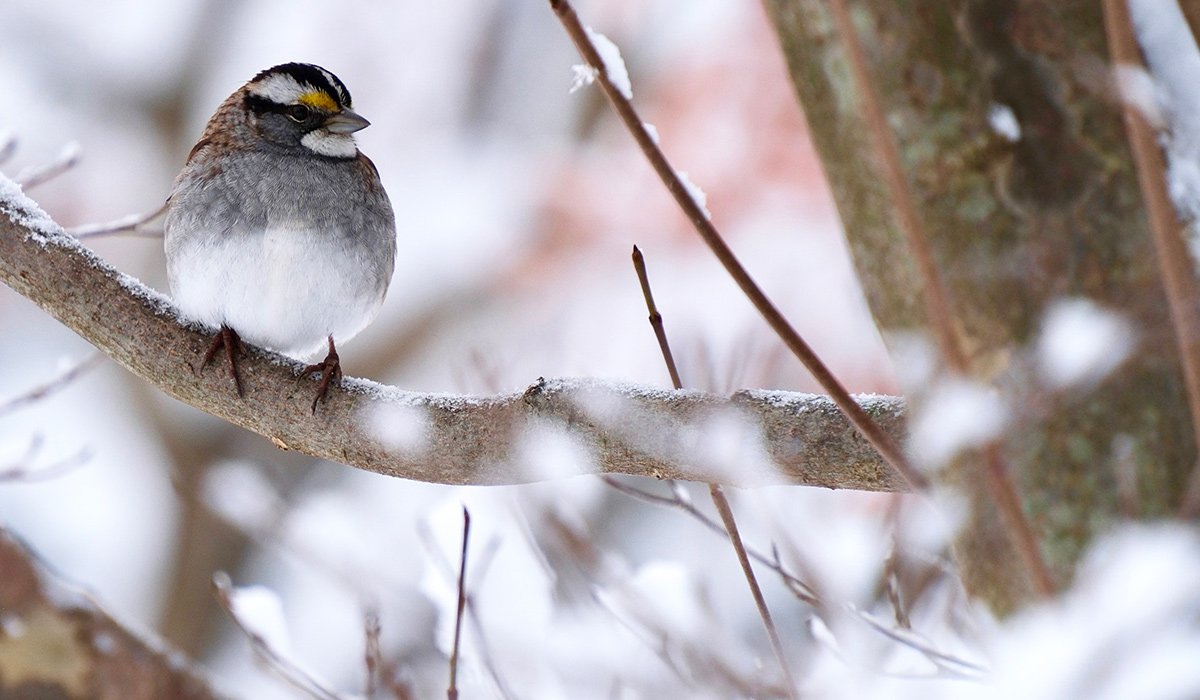 With berries, seed heads, and plenty of places for shelter, it’s no surprise that birds make visits to Carol’s garden in winter. This white-throated sparrow (Zonotrichia albicollis) looks well-fed for the cold months ahead.
Thank you so much for another incredible collection of photos, Carol! Your winter submissions are incredible sources of inspiration and fantastic reminders that beauty is abundant in every season.
From fresh snow scenes to those rare winter blooms, please consider sharing photos of your winter garden with the blog. Follow the NEW directions below to submit your photos to Garden Photo of the Day!
We want to see YOUR garden!
Have photos to share? We’d love to see your garden, a particular collection of plants you love, or a wonderful garden you had the chance to visit!
To submit, fill out the Garden Photo of the Day Submission Form.
You can also send 5–10 photos to [email protected] along with some information about the plants in the pictures and where you took the photos. We’d love to hear where you are located, how long you’ve been gardening, successes you are proud of, failures you learned from, hopes for the future, favorite plants, or funny stories from your garden.
Do you receive the GPOD by email yet? Sign up here
Fine Gardening Recommended Products

ARS Telescoping Long Reach Pruner
Fine Gardening receives a commission for items purchased through links on this site, including Amazon Associates and other affiliate advertising programs.
Telescopes from 4 to 7′. Cut and Hold (160) Blades. Drop forged blades for unsurpassed long lasting sharpness. Lightweight, 2.3 lbs., for continued use. Perfectly balanced for easy pruning.
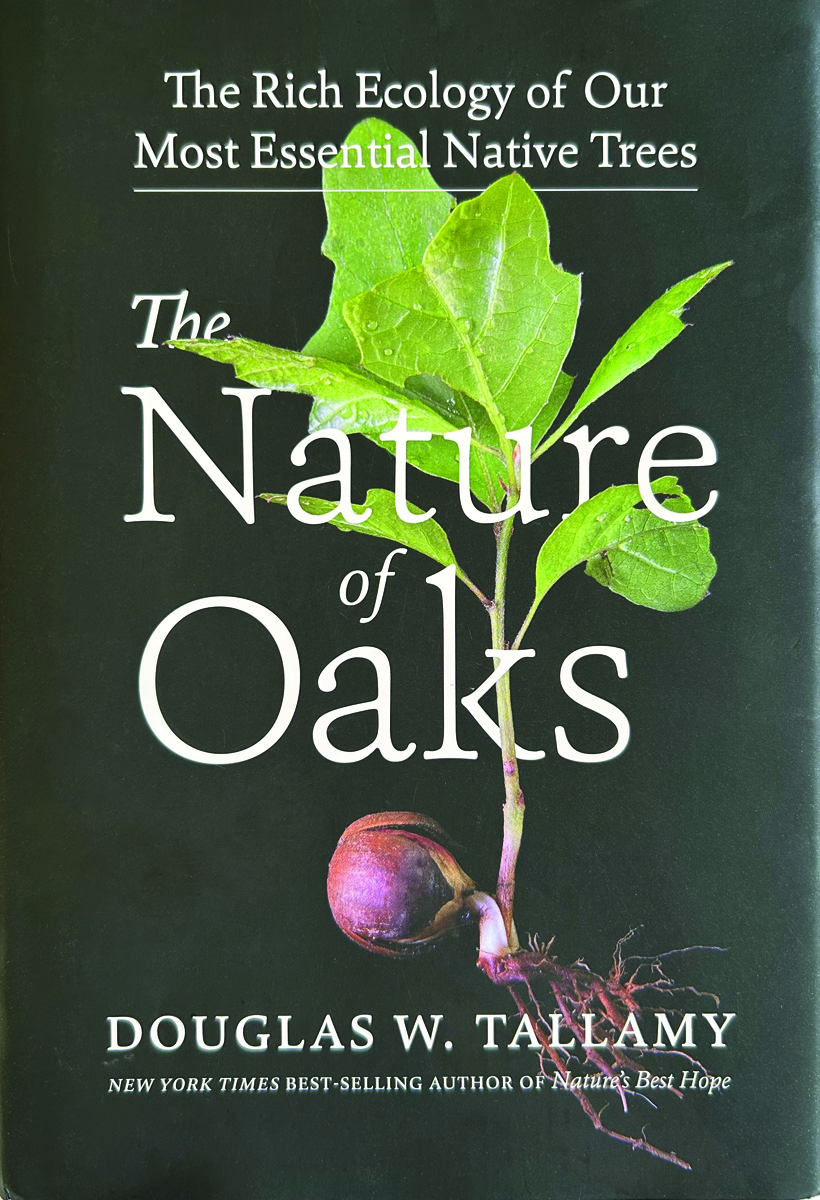
The Nature of Oaks: The Rich Ecology of Our Most Essential Native Trees
Fine Gardening receives a commission for items purchased through links on this site, including Amazon Associates and other affiliate advertising programs.
The Nature of Oaks reveals what is going on in oak trees month by month, highlighting the seasonal cycles of life, death, and renewal. From woodpeckers who collect and store hundreds of acorns for sustenance to the beauty of jewel caterpillars, Doug Tallamy illuminates and celebrates the wonders that occur right in our own backyards. He also shares practical advice about how to plant and care for an oak, along with information about the best oak species for your area.

DeWalt Variable-Speed Cordless Reciprocating Saw with 6-Piece Saw Blade Set
Fine Gardening receives a commission for items purchased through links on this site, including Amazon Associates and other affiliate advertising programs.
You can fit a variety of blades to this saw to cut fallen branches or prune larger limbs from trees in a pinch. It’s fast, tough, easy to use, and extremely versatile.
– 18.31 x 6.13 x 4 inches
– 1-1/8-inch stroke length
– Variable speed trigger with 0-3000 spm
– DW4856 Metal/Woodcutting Reciprocating Saw Blade Set, 6-Piece